Enhancing Highway Sweeper Safety with AI
Rising Accidents Highlight a Growing Safety Concern
Highway sweeping vehicles play a vital role in keeping our roads clean and safe. Yet, in recent years, accidents involving these vehicles have increased, resulting in both fatalities and injuries. For instance, a recent highway sweeper accident reported by the BBC highlights the very real dangers these operators face. Operating alongside high-speed traffic, often near large commercial vehicles that create blind spots, highway sweepers encounter unique hazards that make even routine operations risky. Collisions are the leading cause of these incidents, and with typical operational speeds around 60 km/h, the consequences can be severe.
The Hidden Risks of Highway Sweeping Operations
Several factors contribute to the danger of highway sweepers:
- Blind Spots: Large vehicles and roadside structures can obscure a sweeper’s view, increasing the risk of collision.
- Limited Maneuverability: Sweeper turning radius and the need for precise navigation can complicate avoidance of obstacles, especially on busy highways.
- Speed: High-speed operation leaves little margin for error, increasing the severity of potential accidents.
As these risks become more apparent, manufacturers are seeking innovative solutions to enhance highway sweeper safety and protect operators.
A Real-World Solution: AI-Powered Highway Sweepers
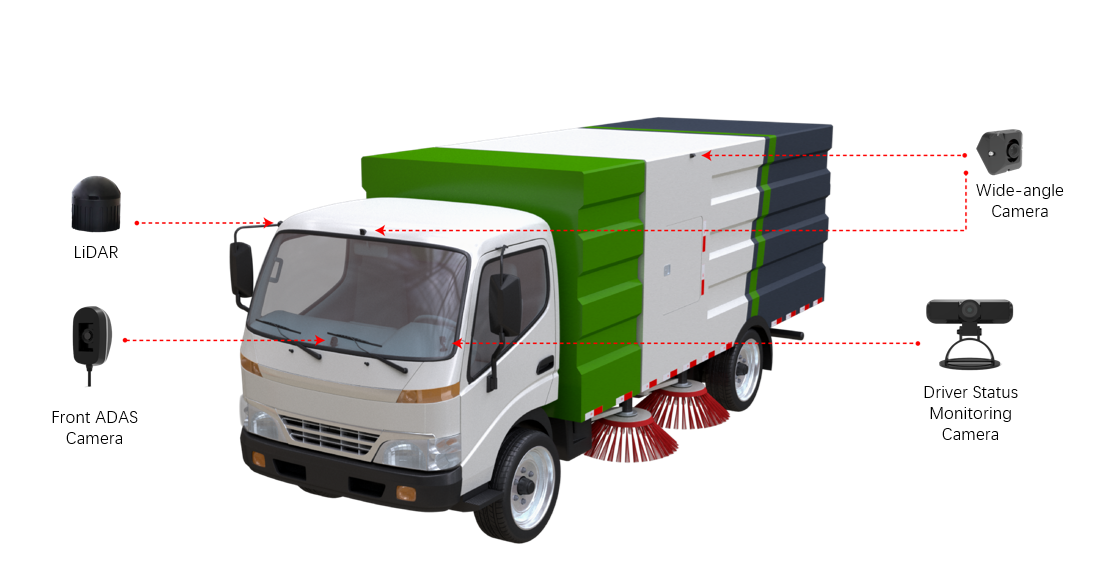
To address these concerns, we partnered with a leading highway sweeper manufacturer to implement a comprehensive AI collision avoidance system. This project illustrates how AI for industrial vehicles can transform high-speed highway sweeping operations.
Key AI Safety Requirements
The AI system was designed with the following capabilities to reduce operational risk:
- AI Virtual Road Lanes: The sweeper follows virtual lanes created by AI, ensuring it stays within designated operational zones and avoids highway barriers or adjacent traffic lanes.
- Adaptive 360-Degree View: High-speed operation: Operators receive a clear front and rear view to monitor approaching vehicles. Low-speed operation: The system provides an all-around view to navigate tight spaces and detect obstacles in maintenance zones.
- Collision Avoidance: Using AI algorithms and LiDAR for vehicle safety, the system continuously monitors distances to nearby obstacles and hazards. Operators are alerted if the sweeper approaches any potential collision point, reducing the risk of accidents.
- Data-Driven Path Assurance: Operational data is collected and analyzed to ensure the vehicle remains on its designated path. Insights from this data allow manufacturers to optimize routes and improve safety standards over time.
How AI Enhances Highway Sweeper Safety
By integrating these functions, AI-powered highway sweepers provide multiple layers of protection:
- Prevent collisions before they occur.
- Improve operator awareness around blind spots and complex traffic situations.
- Offer actionable insights to continuously optimize operations and enhance safety.
Conclusion
Highway sweeping is inherently high-risk, and the need for intelligent safety solutions has never been greater. AI collision avoidance systems, combined with virtual lanes, adaptive 360-degree monitoring, and data-driven path analysis, allow sweepers to operate safely, even in fast-moving traffic conditions.
At Vispect, we are proud to collaborate with manufacturers to implement AI-driven safety solutions that save lives and improve operational efficiency. If you are looking to elevate the safety of your industrial or highway vehicles, contact us to explore how AI can make a real difference.